Currently Empty: $0

About Course:
Professional Development Certificate
K-12 & HigherEd Educators
4 hours session
CILL Certification
Overview
“UDL isn’t about erasing differences to make ‘one-size-fits-all’ lessons and assessments. It’s about recognizing barriers, naming them, highlighting them, celebrating them, and designing for them.” Katie Novak
Universal Design for Learning (UDL) is a research-informed framework that supports educators in designing learning experiences that anticipate learner variability and reduce barriers from the outset. Rather than adapting instruction after challenges arise, UDL encourages flexible planning that enables all learners to access, engage with, and demonstrate meaningful learning.
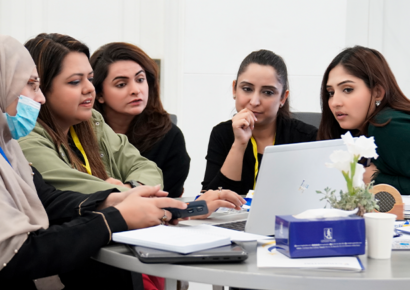
In this interactive workshop, participants explore the three core UDL principles Engagement, Representation, and Action & Expression and apply them to curriculum design, instructional practices, and assessment. Through case studies, guided reflection, and hands-on redesign tasks, educators examine how everyday design choices can either limit or expand access to learning.
The workshop emphasizes practical, immediately applicable strategies and positions UDL as an iterative design process grounded in observation, reflection, and learner data. Participants leave with concrete tools and a renewed lens for designing inclusive, high expectation learning environments.
Intended Audience
This workshop is designed for K–12 and higher education educators, including classroom teachers, learning support staff, curriculum coordinators, instructional coaches, and academic leaders. It is particularly suited for professionals who want to strengthen inclusive practice, address learner variability, and design lessons, assessments, and learning environments that are accessible, flexible, and responsive by design rather than through after-the-fact accommodations.
What Participants Acquire
Participants explore the three core UDL principles e.g. Engagement, Representation, and Action & Expression as lenses for examining curriculum, assessment, instructional routines, and learning environments. The workshop emphasizes that UDL is not a checklist or a set of tools, but an iterative design process informed by observation, reflection, and learner data.
Through real classroom examples and case-based discussions, teachers examine how small, intentional design choices can increase access, agency, and participation. The pedagogy highlights that when barriers are reduced, learners are better able to engage, demonstrate understanding, and see themselves as capable contributors. UDL is presented as a practical, immediately applicable framework that strengthens inclusion while maintaining high expectations for all learners.
By the end of this workshop, participants will gain:
1) Practical understanding of the three UDL principles: Engagement, Representation, and Action & Expression
2) Skills to identify barriers embedded in curriculum, instruction, assessment, and learning environments
3) Strategies to redesign lessons, activities, and assessments to increase accessibility and learner agency
4) Tools to use observation and classroom data to make evidence-informed instructional improvements
5) Hands-on experience applying multimodal and flexible teaching approaches that engage all learners
6) A reflective lens for iterative, equity-focused instructional design that maintains high expectations
Training Structure
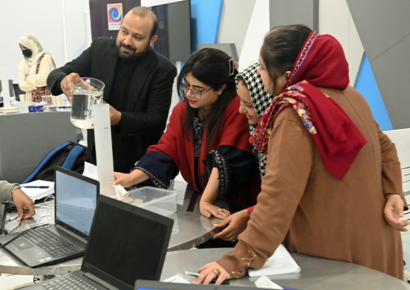
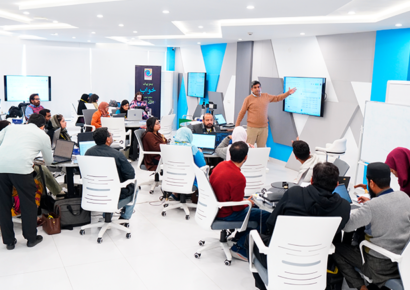
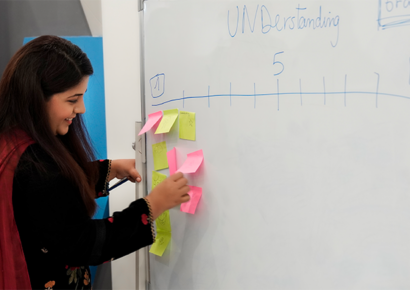
Hands-on learning experience:
✓ Identifying barriers in lessons, assessments, and classroom routines
✓ Exploring the three UDL principles through real classroom examples
✓ Analyzing goals, methods, and materials to separate learning from delivery
✓ Redesigning lessons with flexible pathways and multiple access points
✓ Experiencing multimodal strategies that model UDL in action
✓ Using learner data to propose actionable improvements
✓ Planning one immediate UDL-aligned change for your context
Impact and Alignment