Currently Empty: $0

Professional Development Certificate
Early Years and Primary Years
2-4 hours session
CILL Certification
Overview
The Pedagogical Pillars workshops weave together four transformative ideas that redefine what high-quality learning looks like in a world that refuses to standstill. Across the series, teachers journey from understanding learners to empowering them, and finally to partnering with the tools of the future. The collective arc begins with a deep dive into Assessment for Understanding, shifting assessment from a scoreboard to a compass, something that helps learners make meaning, take ownership of growth, and see themselves as thinkers. This foundation leads into Designing for Differences, where teachers learn to honor the extraordinary diversity within every classroom through responsive planning, adaptive strategies, and a pedagogy of care that says: “Every child belongs, every child learns, and every child matters.”
As the workshops progress, the spotlight moves to Agency as Pedagogy, exploring how a classroom transforms when students aren’t merely involved but truly in charge making choices, constructing knowledge, and shaping the rhythm of their own learning stories. Finally, the series looks outward and forward with AI in Education, helping teachers embrace artificial intelligence not as a shortcut, but as a strategic partner that personalizes learning, streamlines practice, and builds future-ready inquiry experiences that amplify, not replace, the human touch. Together, these pillars form a cohesive, forward-thinking model of practice where assessment guides, diversity strengthens, agency energizes, and AI accelerates creating classrooms aligned with newest research and practices.
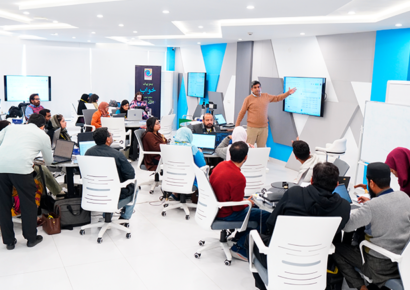
This in-person workshop series is designed for teachers who want to deepen their understanding and practice of teaching and learning. Each workshop varies in duration from four hours to two hours and can be attended individually or as part of the complete series. To receive the certificate of participation, participants must complete the required tasks during the workshop and attend the entire duration of the workshop.
Intended Audience
This workshop series is designed for practicing teachers across Early Years, and Primary levels who want to strengthen and modernize their classroom practice. It is particularly suited for educators, curriculum coordinators, and instructional leaders interested in assessment for learning, inclusive and differentiated teaching, learner agency, and the thoughtful integration of AI to support meaningful, future-ready learning.
What Participants Acquire
Pillar 1: Assessment for Understanding
By the end of this workshop, participants will gain:
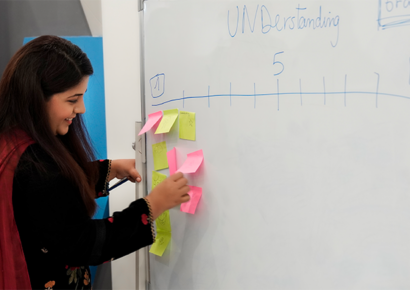
✓ A clear understanding of assessment as a tool for making student thinking visible rather than measuring performance
✓ Practical strategies to use observation, conversation, and documentation to guide instruction
✓ Skills to design formative assessment opportunities that support conceptual understanding and learner reflection
✓ Tools to provide feedback that advances learning and supports student ownership of progress
✓ Confidence in using assessment evidence to adapt teaching in real time
Pillar 2: Designing for Differences
By the end of this workshop, participants will gain:
✓ A deeper understanding of learner variability and its implications for classroom practice
✓ Strategies to identify and reduce barriers to learning within tasks, materials, and routines
✓ Skills to design differentiated learning experiences with flexible pathways to common goals
✓ Practical tools for inclusive practices such as flexible grouping, choice, and multimodal learning
✓ Confidence in planning for diversity as a strength rather than a challenge
Pillar 3: Agency as Pedagogy
By the end of this workshop, participants will gain:
✓ A clear understanding of student agency as a daily pedagogical stance
✓ Strategies to shift decision-making, voice, and ownership from teacher to learner
✓ Tools to co-construct routines, expectations, and learning experiences with students
✓ Language and feedback practices that reinforce autonomy, identity, and responsibility
✓ Confidence in designing classrooms where learners actively shape their learning
Pillar 4: AI in Education
By the end of this workshop, participants will gain:
✓ A grounded understanding of AI’s role in education and its ethical considerations
✓ Practical strategies to use AI for planning, differentiation, and personalized learning
✓ Tools to support multilingual learners, adaptive pathways, and inquiry design using AI
✓ Skills to integrate AI in ways that enhance, not replace, human interaction and judgment
✓ Confidence in using AI as a responsible partner for future-ready teaching