Currently Empty: $0

Professional Development Certificate
Early Years
4.5 hours session
CILL Certification
Overview
This workshop series is designed for educators, program leaders and parents who want to deepen their understanding and integrate play-based learning into their practice. Curriculum coordinators and administrators interested in understanding what the practical application of Reggio Emilia and IB Early Years approaches looks like.
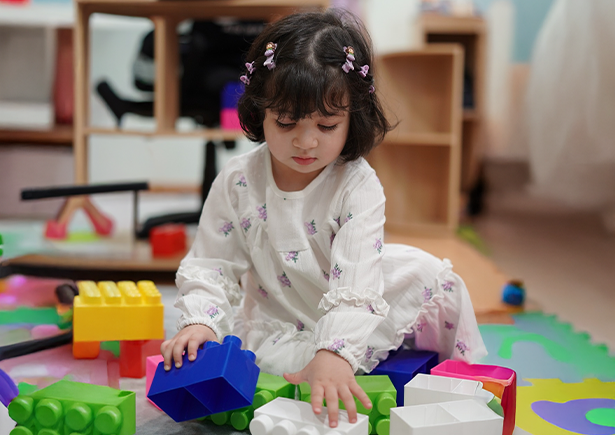
Participants will explore the principles and practices of play-based learning with emphasis on the child as a capable learner, the educator as a guide, and the environment as the “third teacher.” Drawing on the philosophies of Reggio Emilia and the IB Early Years Programme, the series will highlight how play fosters inquiry, creativity, agency, and holistic development.
Practical strategies for designing, documenting, and extending play will be demonstrated, with opportunities for participants to apply them in their own settings. The aim is for educators to leave with a deeper understanding of play as pedagogy, strategies to create inquiry-rich environments, and tools to align play-based learning with curriculum.
Intended Audience
This workshop is designed for Early Years educators, school leaders, and programme coordinators working with children aged 2–8, as well as parents interested in play-based learning. It is well suited for those working in or exploring Reggio Emilia–inspired and IB Early Years aligned settings who want practical strategies for designing play-rich learning environments.
What Participants Acquire
This workshop series invites educators, leaders, and parents to rethink play not as an add-on to learning, but as a powerful pedagogical foundation. Grounded in early childhood research and inspired by the Reggio Emilia philosophy and the IB Early Years Programme, the series explores how play nurtures thinking, agency, creativity, and deep engagement in young learners.
Across the sessions, participants will examine play as a serious and intentional mode of learning, positioning children as capable thinkers, educators as co-learners, and learning environments as active contributors to meaning making. Through real examples, reflective dialogue, observation tools, and practical design strategies, the workshop bridges theory and practice, supporting participants to notice learning within play, respond thoughtfully to children’s ideas, and create environments that invite inquiry and collaboration.
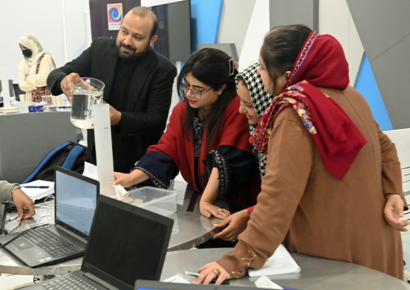
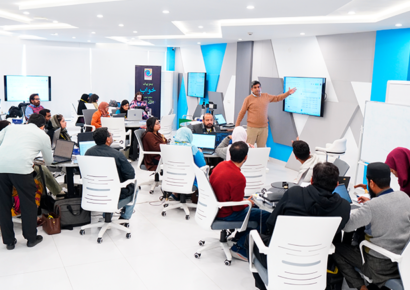
The series is highly interactive and practice-oriented, encouraging participants to apply ideas directly within their own classrooms, schools, or home settings through guided certificate tasks. By the end of the workshop, participants will have developed a shared language for play-based pedagogy, concrete strategies for extending learning through play, and renewed confidence in designing experiences and spaces that honor children’s curiosity and competence.
Training Structure
Hands-on learning experience:
✓ Exploring play as a pedagogical stance and noticing learning in action
✓ Observing children’s thinking, schemas, and engagement to inform co-learning
✓ Practicing intentional educator moves that extend play without taking control
✓ Analyzing and redesigning learning spaces to foster inquiry, creativity, and collaboration
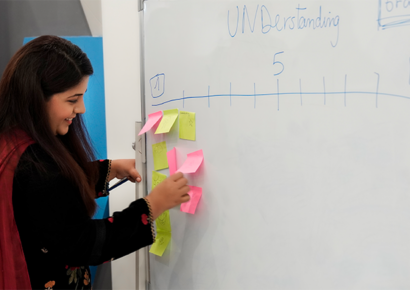
✓ Reflective documentation, mapping, and sketching to guide lesson and environment design
✓ Practical strategies and tools that can be applied immediately in classrooms, schools, or home settings
Impact and Alignment
Session 1: Play as a Starting Point
By the end of Session 1, participants will be able to:
Session 2: Children as Thinkers, Educators as Co-Learners
By the end of Session 2, participants will be able to:
Session 3: Spaces that Spark Learning
By the end of Session 3, participants will be able to:
Align environmental design with play-based pedagogy and school philosophy.