Currently Empty: $0


Professional Development Certificate
Secondary/High-school Teachers
HigherEd Faculty
3 Days
Overview
Even seemingly inconsequential phenomena, like a falling leaf or a flickering candle flame, or an inflating balloon can possess rich physical and mathematical insights. Through meticulous observation of these physical phenomena, through accurate instruments, one can understand the structure of our physical world, draw patterns from it enabling communication of scientific data to peers and the public.
Practical investigations of natural phenomena entails the art and science of measurement. This process becomes part of the scientific method and weaves into the framework of scientific learning which has its own nuances. Understanding the neurological processes that shape learning also help in improving both teaching and learning.
This workshop is designed to provide existing and future STEM faculty, graduate students and post-doctoral fellows with an introduction to effective teaching strategies and the research that supports innovative practical laboratory-oriented instruction. The goal of this three day workshop is to equip the next generation of STEM faculty and/or graduates wanting to delve deeper into the scientific inquiry process, to become effective teachers, thus improving the learning experience for the thousands of students they will teach.
Through this experiential workshop, participants will be able to cultivate their observation and inquiry skills by engaging with everyday natural phenomena. Most of these experiments will revolve around observation, measurements using IoT style sensors, video recordings, plotting, and mathematical analysis involving significant data analytics. The overall aim is to revolutionise STEM teaching in Pakistan by improving how laboratory-focused STEM education is delivered, rather than focusing on students’ grades.
Intended Audience
This workshop is designed to support both current and aspiring STEM faculty, graduate students, andpost-doctoral researchers by introducing evidence-informed teaching strategies that strengthen laboratory-based instruction.
What Participants Acquire
By the end of the three-day workshop, participants will acquire:
● The ability to design laboratory investigations that transform everyday phenomena into measurable, analyzable data
● Practical experience in observation, measurement, and data generation using simple instruments, IoT-style sensors, and smartphones
● Skills to analyze, visualize, and interpret experimental data through plotting, modeling, and software-based tools
● Deeper conceptual understanding of Newtonian mechanics, thermal physics, electricity, and motion through real-life applications
● Insight into how neuroscience and psychobiology of learning influence attention, stress, inquiry, and retention
● Pedagogical strategies aligned with phenomenon-based and constructivist learning, where inquiry precedes explanation
● Confidence to design resource-efficient, scalable laboratory experiences that prioritize learning quality over grades
Training Structure
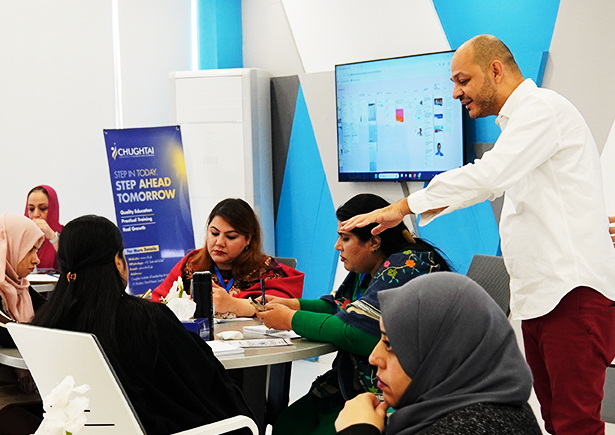
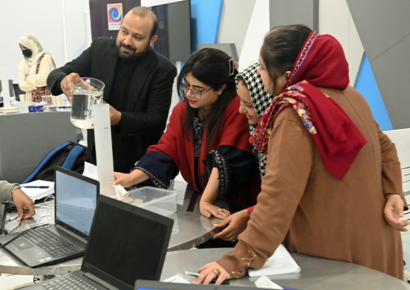
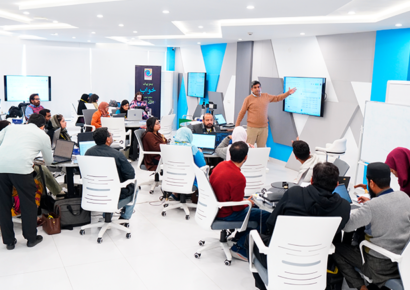
Hands-on, practice-oriented learning experience:
● Short conceptual inputs embedded in real classroom challenges.
● Modelling of inclusive learning strategies and classroom structures.
● Guided analysis of engagement and self-regulation challenges.
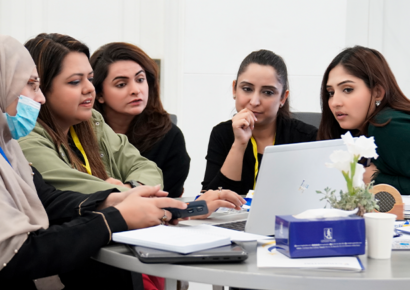
● Collaborative discussion and peer learning.
● Hands-on application of strategies to participants’ own teaching contexts.
● Rehearsal of teacher language, routines, and feedback practices.
● Structured reflection to connect pedagogy, practice, and learner experience.
Impact and Alignment
By the end of this workshop, participants will be able to:
● Immersive, inquiry-driven, hands-on learning experience across three days:
● Engaging directly with everyday physical phenomena through guided experimentation
● Practicing accurate measurement, record-keeping, and lab logging, including ethical data collection
● Using smartphones and cameras as scientific instruments for capturing and quantifying phenomena
● Working in small groups to design, test, revise, and present experimental investigations
● Integrating mini-lectures and Socratic dialogue to surface misconceptions and deepen conceptual understanding
● Analyzing data through plotting, visualization, and mathematical reasoning
● Designing and presenting phenomenon-based group projects that demonstrate inquiry, analysis, and communication
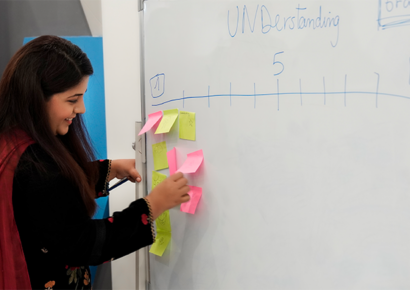
● Ongoing reflection and feedback to connect laboratory practice with teaching improvement
Certification
In order to qualify for the certificate, participants are expected to attend all sessions. Moreover, they are expected to actively participate throughout the three days of the workshop e.g. by generating and tabulating data, making graphs, inferring from the data. Please note: Distinction on projects will be given to participants whose projects stand out to the workshop facilitators. Distinction holders may be contacted in the future to be a resource person in future workshops.