Currently Empty: $0

Professional Development Certificate
Early Years
2 hours session
CILL Certification
Overview
In IB-aligned schools, Approaches to Learning (ATLs) are often discussed in relation to classroom inquiry, academic tasks, and unit planning. However, many of the most powerful opportunities to develop ATLs such as self-management, collaboration, reflection, and resilience emerge through movement, play, challenge, and physical engagement.
This interactive workshop explores PSPE as a rich context for intentionally developing ATLs through movement-based learning. Using practical PSPE scenarios, collaborative analysis, and lesson redesign, participants examine how everyday activities such as games, routines, and physical challenges can explicitly strengthen students’ capacity to manage themselves, work with others, reflect on experience, and persist through difficulty.
The session emphasizes intentionality: moving from “ATLs happen naturally in PSPE” to deliberately designing for them.
Intended Audience
This workshop is designed for PSPE teachers working in IB-aligned or inquiry-based school settings, particularly those teaching at the primary and middle years levels. It is well suited for educators who want to strengthen the intentional integration of Approaches to Learning (ATLs) within PSPE lessons and support the development of students’ self-management, communication, collaboration, and reflection skills through movement-based learning.
What Participants Acquire
By participating in this workshop, educators will:
● Develop a clear understanding of Approaches to Learning as skill-based capabilities rather than behaviours or dispositions
● Identify how self-management skills (e.g. goal setting, persistence, emotional regulation during challenge) can be intentionally developed through PSPE activities
● Understand how collaboration skills (e.g. turn-taking, shared responsibility, teamwork, negotiation) are embedded within movement-based learning
● Learn how to design opportunities for reflection, helping students think about effort, strategy, improvement, and learning from experience
● Create collaborative learning structures in which students depend on one another for planning, problem solving, and shared responsibility during PSPE tasks.
● Explore how resilience is developed through physical challenge, failure, feedback, and retrying within safe PSPE environments
● Strengthen their ability to make ATLs visible through teacher language, lesson design, and success criteria
Training Structure
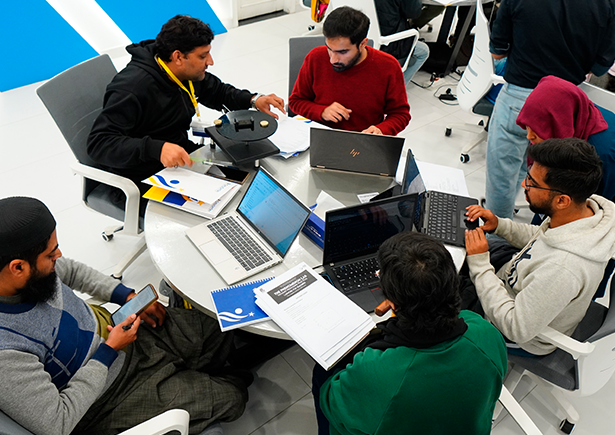
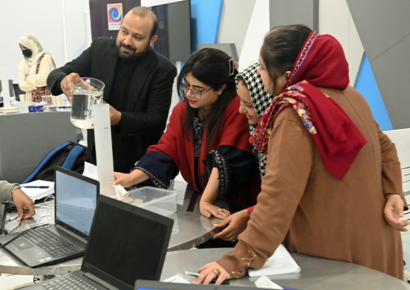
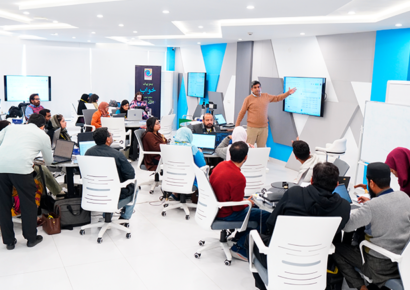
Hands-on, movement-centered learning experience:
✓ Examining PSPE activities to identify embedded ATL opportunities (e.g. teamwork games for collaboration)
✓ Mapping self-management, collaboration, reflection, and resilience skills within common PSPE routines and games
✓ Analyzing short PSPE lesson examples to distinguish implicit vs intentional ATL development
✓ Co-designing lesson components that embed self-management, collaboration, reflection, and resilience into PSPE learning engagements.
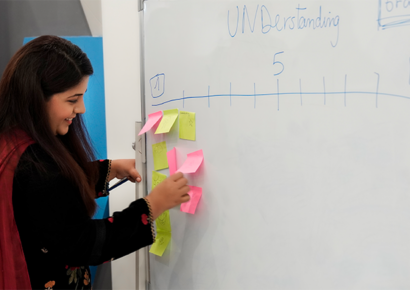
✓ Engaging in peer discussion to explore multiple ways ATLs can be surfaced through movement
✓ Reflecting on teacher prompts, feedback, and questioning that make ATLs visible to students
✓ Identifying one PSPE lesson or routine to refine and trial in participants’ own context
Impact and Alignment
By the end of this workshop, participants will be able to:
1. Intentionally embed self-management, collaboration, reflection, and resilience within PSPE lessons
2. Analyze PSPE learning experiences through an ATL lens to assess how effectively life skills are being developed through movement
3. Evaluate and refine PSPE learning sequences with clear success criteria for ATL skill progression and transfer to other transdisciplinary contexts.